












Robinia pseudoacacia 'FRISIA' golden locust

 Symbivit Tric (arbuscular)
 Symbivit (arbuscular)
European gardens love colours. And the truth is what a tropical garden has to offer in terms of colours of the flowers, our gardens can easily compete beating it with colours and shapes of the leaves. Hence one of our most attractive trees, a jewel among gold-leaved: golden locust. It was first discovered in Willem Jensen nursery in Holland in 1935, and was named after the province Friesland.
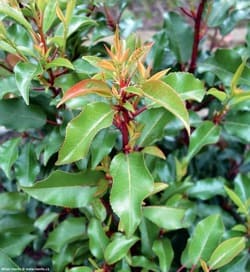
Frisia leaves are pinnate, composed of 23 oval, individual leaflets, forming an overall leaf of 25-30 cm. They are always bright yellow-green, sometimes really golden-yellow when they emerge, and shine so much you can never miss it from a respectable distance. They can brighten up the darkest corner of every garden.
That was our case, too: we planted not very nice one we had on a place full of garden rubbish, stones, sand and used mulch. Truly, we did not believe it would survive the winter. To our utmost surprise it did survive, moreover, it sprang unbelievably and made new branches more than 1m long. From that date it is our prot�g� and we freely suggest planting it in poor soils provided it is well drained, not heavy or clay, and under no conditions wet.
Last update 08-12-2008.
When it comes to moisture, it prefers to dry out for a couple of weeks rather than stand in water for a few days. It grows vigorously and its size can be easily controlled by pruning by end of winter. Ideal for pollarding. Fully hardy to -34�C (USDA zone 4).