




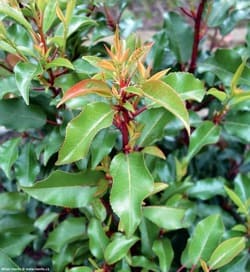
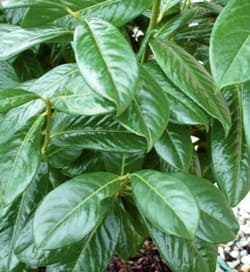
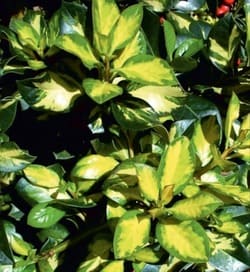








Ilex aquifolium 'INGRAMII' English holly - male

 Symbivit Tric (arbuscular)
 Symbivit (arbuscular)
Ilex
English hollies are among the most common evergreen and native plants of milder parts of Europe with high humidity – British Isles, north France, Benelux countries, and milder parts of north Germany. Various species form trees, shrubs or thickets. They are absent from natural Central European landscape but can be cultivated without problems. They are renowned for glossy, often prickly leaves, and multiple variegated forms have been selected for garden cultivation.
Ingramii
is a male English holly variety whose origin I did not manage to find. There are notes about its existence yet before 2000 but it appears to be commercially attractive only from about 2015 or so. It makes heavily toothed, mid-sized leaves or deep green colour with rich silver-white marbling and variegation, especially of young leaves. They emerge with striking pink shades that turn burgundy red, and later mature to green and white.
The stems are deep burgundy red and annual growth is between 15 and 25 cm. As every variegated plant, Ingramii holly, too, often produces branches with reversed foliage – original green leaves of larger size. Such growths must be removed as soon as possible since these branches are more vigorous, and within a few years might take over leaving only a few variegated leaves at the bottom.
Last update 29-01-2020
Hollies can be trimmed or clipped in mid-summer. Pruning that will encourage new growths is advised early in the spring (after the frosts). They need fertile, acidic, moist but well-drained soil. Most of them are very hardy and do not suffer from sunscorch in winter so you can place them in both full sun and part shade. In shaded locations they become somewhat irregular and leggy. Hardy to about -27�C (USDA zone 5b).