












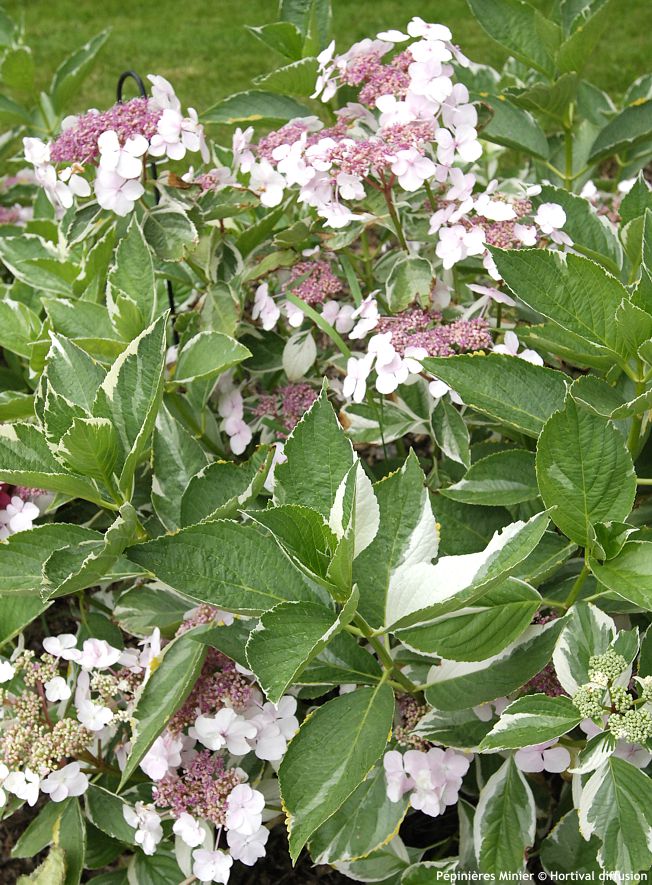
Hydrangea macrophylla 'TRICOLOR' bigleaf hydrangea


 Symbivit Tric (arbuscular)
 Symbivit (arbuscular)
Hydrangea
Bigleaf hydrangea originates from Japan, specifically from the island of Honshu. It was discovered and first described in 1784 by the renowned Swedish botanist Carl Peter Thunberg (1743-1828), who is sometimes described as the "Japanese Linnaeus" because he conducted most of his research in Japan and was a student of Carl Linnaeus, the founder of modern botanical nomenclature. This hydrangea can be recognized by its large, sturdy, and broadly oval leaves, and its strikingly coloured flowers, which are arranged in either rounded clusters (mop-head) or flat-topped clusters (lacecap). It is a well-known fact that the flowers change colour based on soil pH – in acidic (heath-like) soils with a pH range of 3.5 to 4.5, they are blue due to the presence of aluminium, which ensures the blue coloration, while in soils with higher pH (calcareous), the flowers are pink to red. When the soil pH is uneven, which is very common in the continental climate of Central Europe, the flowers are multicoloured.
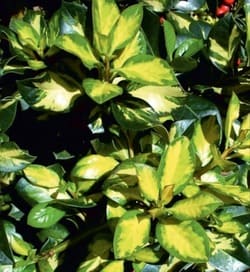
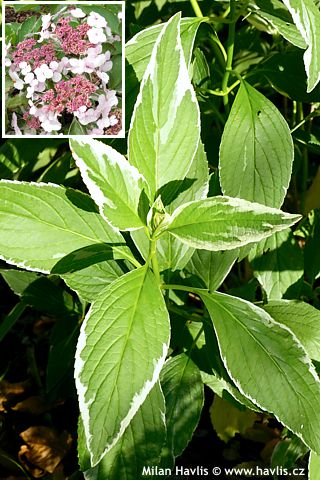
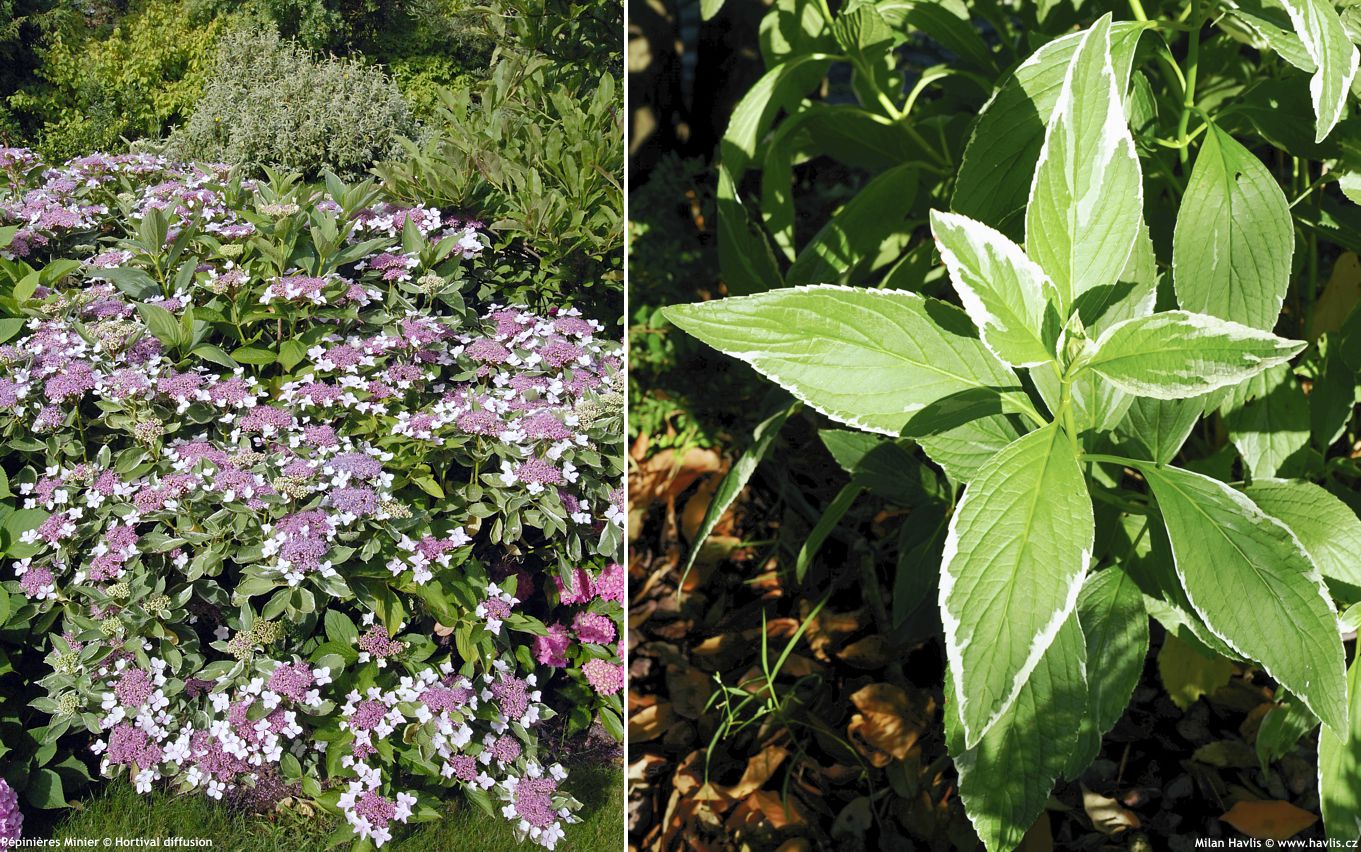
Tricolor is an old variety of bigleaf hydrangea, introduced in 1843 by the Belgian grower Louis van Houtte, who most likely found it during his journey to Japan, as a mutation of the 'Mariesii' variety. Even today, it can still be found under the name 'Mariesii Variegata' which is not an accepted name but we all know what it means. It can be identified by its light green leaves which have varying amounts of white to cream, and occasionally light-yellow variegation at the margins that sometimes extends to the centre of the leaf. This irregularity is very attractive and makes the plant stand out for much longer than just during the flowering period. Additionally, as it is a semi-shade-loving plant, it easily brightens and cheers up darker and dull green corners of the garden.
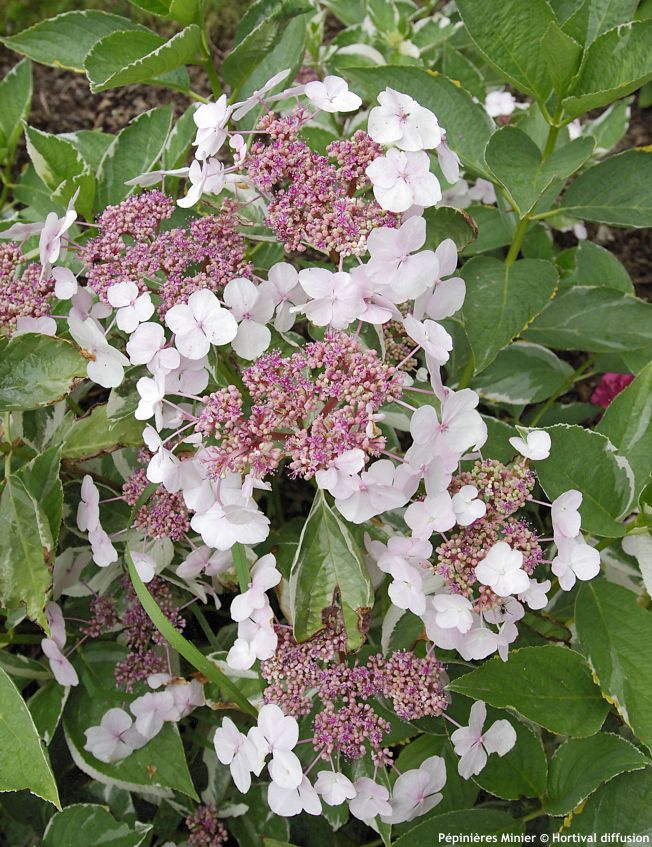
Its flowers are rather flat (lacecap), consisting of small fertile and large sterile flowers. Their colour depends on the soil pH – from light lilac to mauve. It starts blooming significantly later than other varieties, often not until July. After flowering, cut off the entire inflorescence to encourage the faster formation of new flowers, but otherwise, do not prune these hydrangeas – you would lose the flower buds for the coming season. Exceptionally, you can prune it hard for rejuvenation once every few years, but beware that it will not bloom that year. For the most profuse flowering, fertilize it regularly, ideally weekly or every other week, with water-soluble, selective fertilizer high in phosphorus. It grows moderately fast into a well-branched shrub about one and a half meters in height and width.
Last update 15-11-2024
Large-leaved hydrangea grows in moist but well-drained, nutritious soil. Once established, it is not so sensitive to occasional dry spells, but we still recommend frequent watering. It prefers partial shade or diffused sunlight. It can handle direct sun only with daily, regular watering, and in frost-prone areas winter shade will help the buds survive hard frost. Keep it always mulched. Hardy to about -23 �C (USDA zone 6).

Goods are shipped all over Europe. For Russia and U.K. and for further details please read about SHIPPING OPTIONS HERE.
Are you interested in a serious discount for orders NOV-FEB? Check your options here.
THE PRICES INCLUDE VAT of 15%. For quick conversion you can use 1 CZK = approx. 0.04 EUR
- STANDARD QUALITY - Plants of this group are 1st class quality with number of branches and overall density adequate to their size and age, considering they were container grown.
- DE LUXE QUALITY - This label guarantees a luxurious quality of manually selected plants that, compared to their height and age, are exceptionally dense and beautiful.
- EXTRA - These plants are usually mature and bigger specimens with exceptional overall appearance.
- STANDARD (as described in the plant form) means a tree with a trunk of 190-210 cm and a crown at the top, unless specified differently. The commercial size for trees is their girth measured in the height of 1m from ground.
- HOBBY - These plants are of the same quality as our standard-quality plants but younger and therefore cheaper.
- SHRUB - a woody plant with branches growing bushy from the ground level.
- HALF-STANDARD or MINI-STANDARD - a small tree with shorter trunk, its size is usually specified.
- FEATHERED - These are trees with branches growing already from the base of the trunk and up along the stem.
- GRASSES and PERENNIALS - Sizes given usually read the diameter of the pot or the clump, as specified.
