











Gomphostigma virgatum 'SILVER BUTTERFLY' river star, otter bush


 Symbivit Tric (arbuscular)
 Symbivit (arbuscular)
Gomphostigma
The genus Gomphostigma is one of the smallest shrub genera in the figwort family, Scrophulariaceae. Modern taxonomy recognises only two species, both native to a broad region stretching from southern Congo to South Africa. The genus was established by the Russian botanist Nikolai Turczaninow (1796�1863) in 1843, and its name derives from Greek words referring to a club and a stigma, alluding to the unusual shape of the flower. The history of the genus, however, is more complicated than its modest size would suggest. For many years it was closely associated with Buddleja, and some species were originally described within that genus. Even today the discussion is not entirely settled, and certain modern phylogenetic studies continue to highlight the very close relationship between the two groups. Nevertheless, Kew Gardens and most contemporary botanical authorities still recognise Gomphostigma as a distinct genus whose members are naturally associated with riverbanks, seasonal watercourses and moist habitats across southern Africa.
Gomphostigma virgatum was originally described by Carl Linnaeus filius (1741�1783), son of the famous Carl Linnaeus, under the name Buddleja virgata in 1782. It occurs across a remarkably large part of southern Africa, from Zambia and Zimbabwe to the Cape provinces, often growing literally at the edge of running water. This habitat inspired its common names river star and otter bush. For generations it was valued by local communities to produce practical household brooms from its flexible young stems, giving rise to the Afrikaans name besembossie, meaning �broom bush�. Traditional healers employed it as a restorative plant for exhaustion and loss of strength. Its supple shoots are used by birds as nesting material, and it also serves as a host for specialised parasitic plants. Although naturally associated with rivers and streams, it is surprisingly resilient and capable of enduring periods of drought, making it one of the most intriguing South African woody plants to find its way into European gardens.
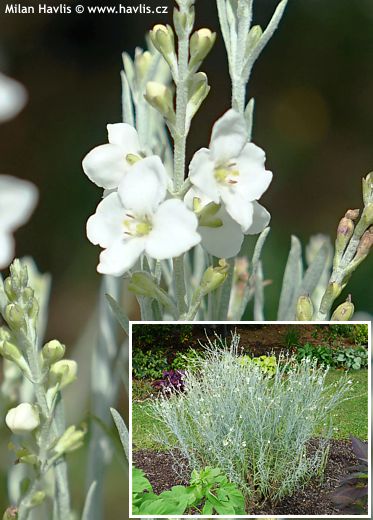
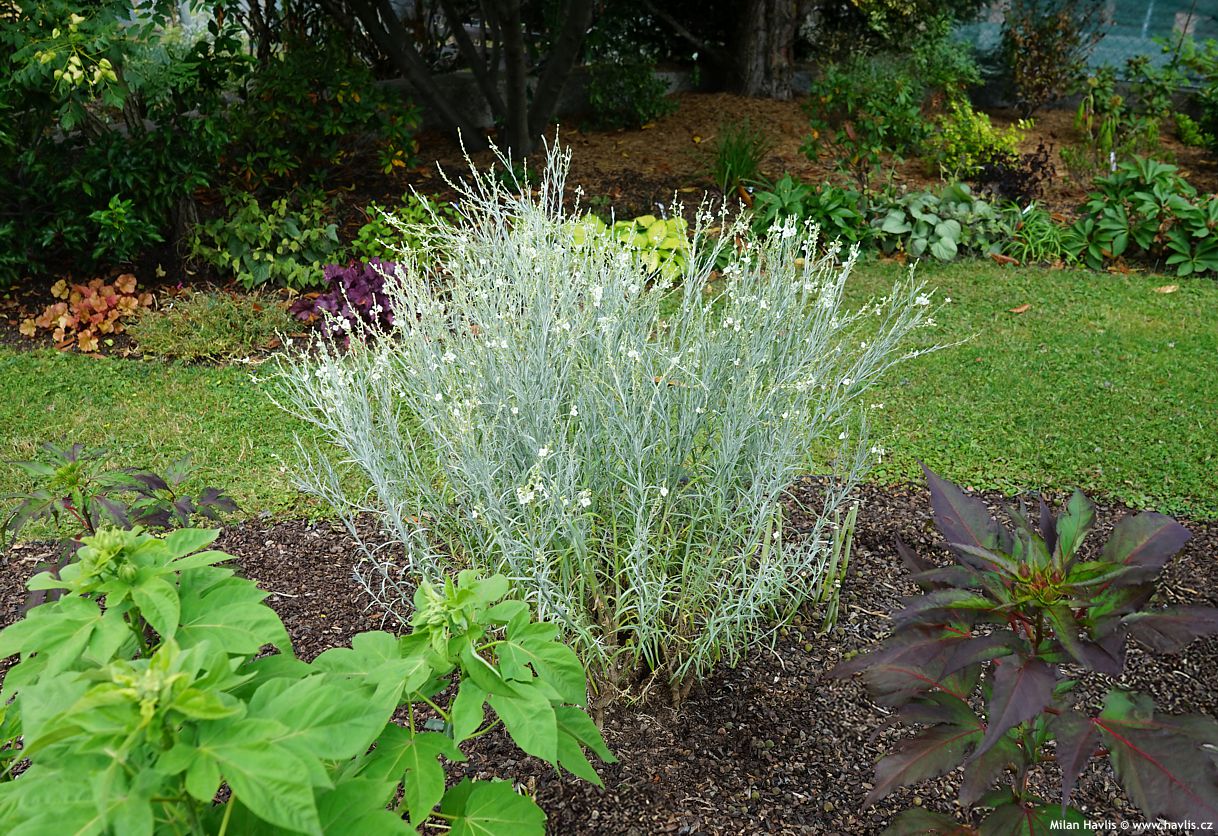
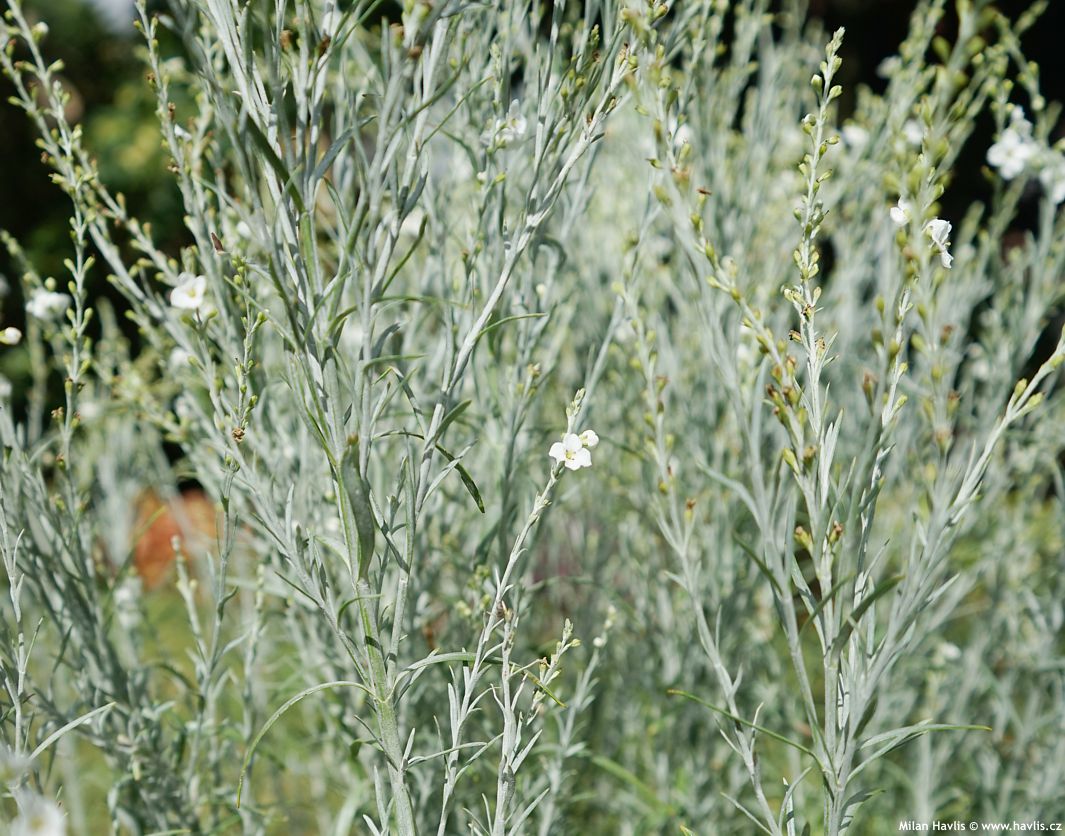
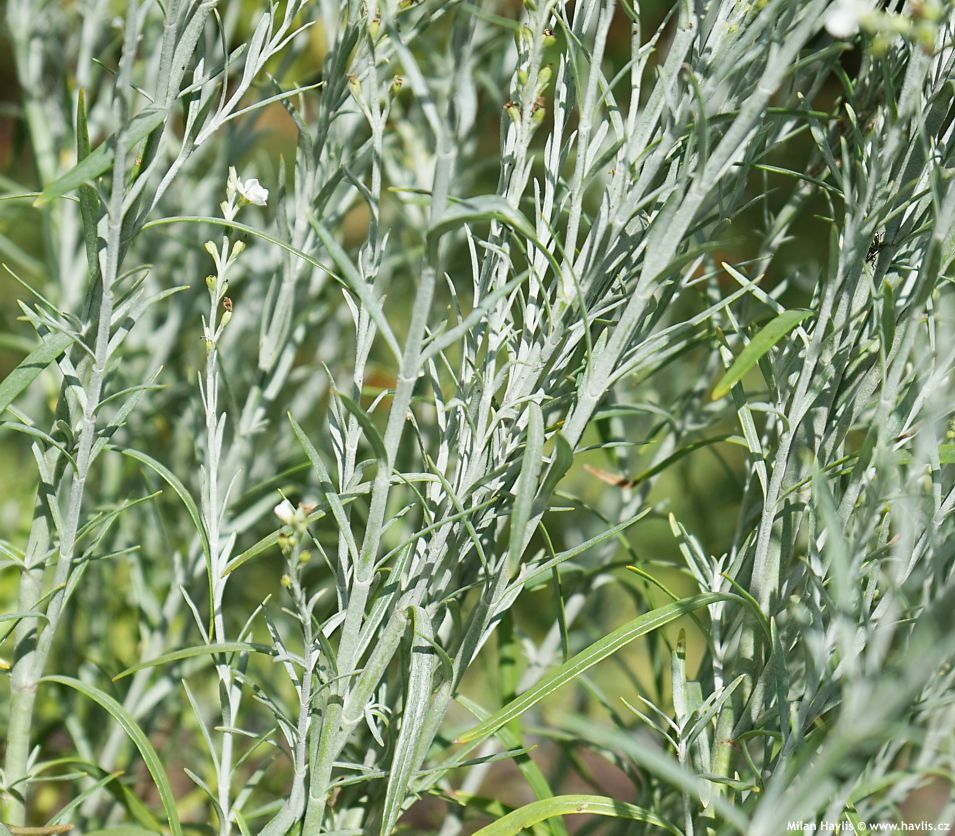
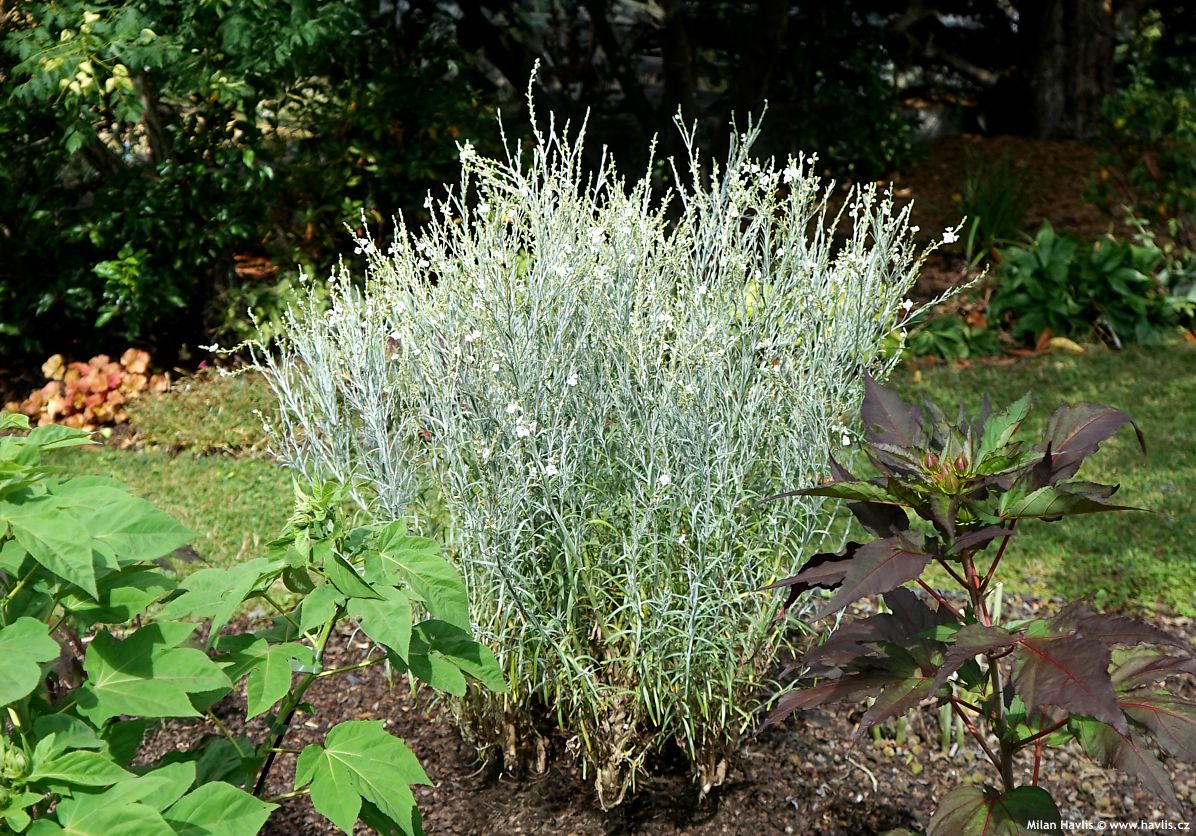
Silver Butterfly is a river star cultivar, selected in South Africa in the 1990s (breeder: Malanseuns Pleasure Plants, Pretoria) and introduced into the European market shortly thereafter. It was chosen for its more intense silvery foliage and compact growth, making it suitable even for smaller gardens or containers. The leaves are narrow, linear to narrowly lanceolate, silvery‑grey to grey‑green, with a fine pubescence that creates the characteristic silvery effect. The overall habit is airy and light, yet dense enough to serve as a striking pale accent in a border. The plant typically reaches about 1 m in height and a similar spread.
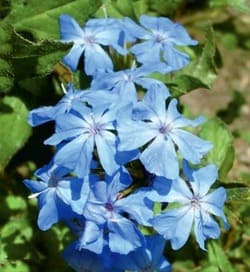
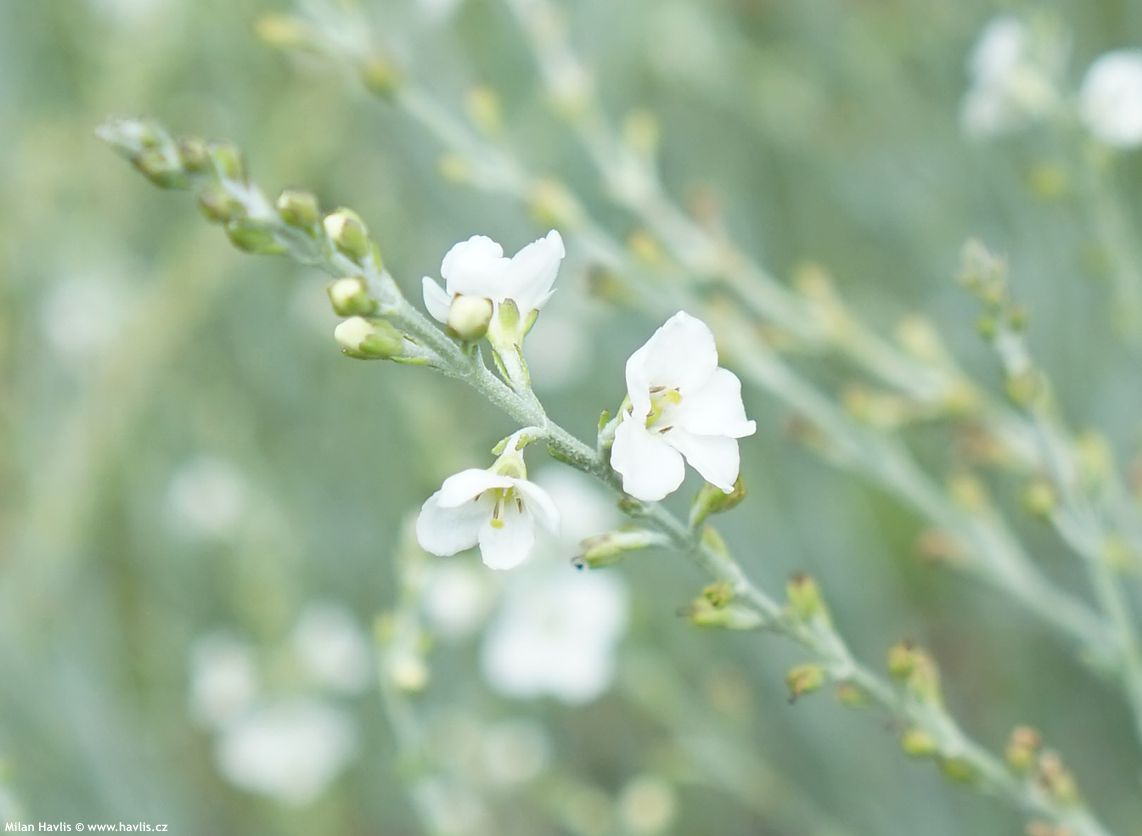
The flowers are pure white, star‑shaped, and small, about 1�2 cm across, with a delicate creamy to pale yellow centre formed by the stamens. They are borne in loose, open racemes to panicles at the tips and upper parts of young shoots, so that in bloom the shrub appears veiled in a soft white haze above the silvery foliage, gently moving in the wind. Flowering begins in late spring and peaks in early summer (usually May to July) but continues reliably into early autumn if the plant receives sufficient sun. Spent panicles can be cut back just below the inflorescence; the plant then quickly produces new shoots with further flowers.
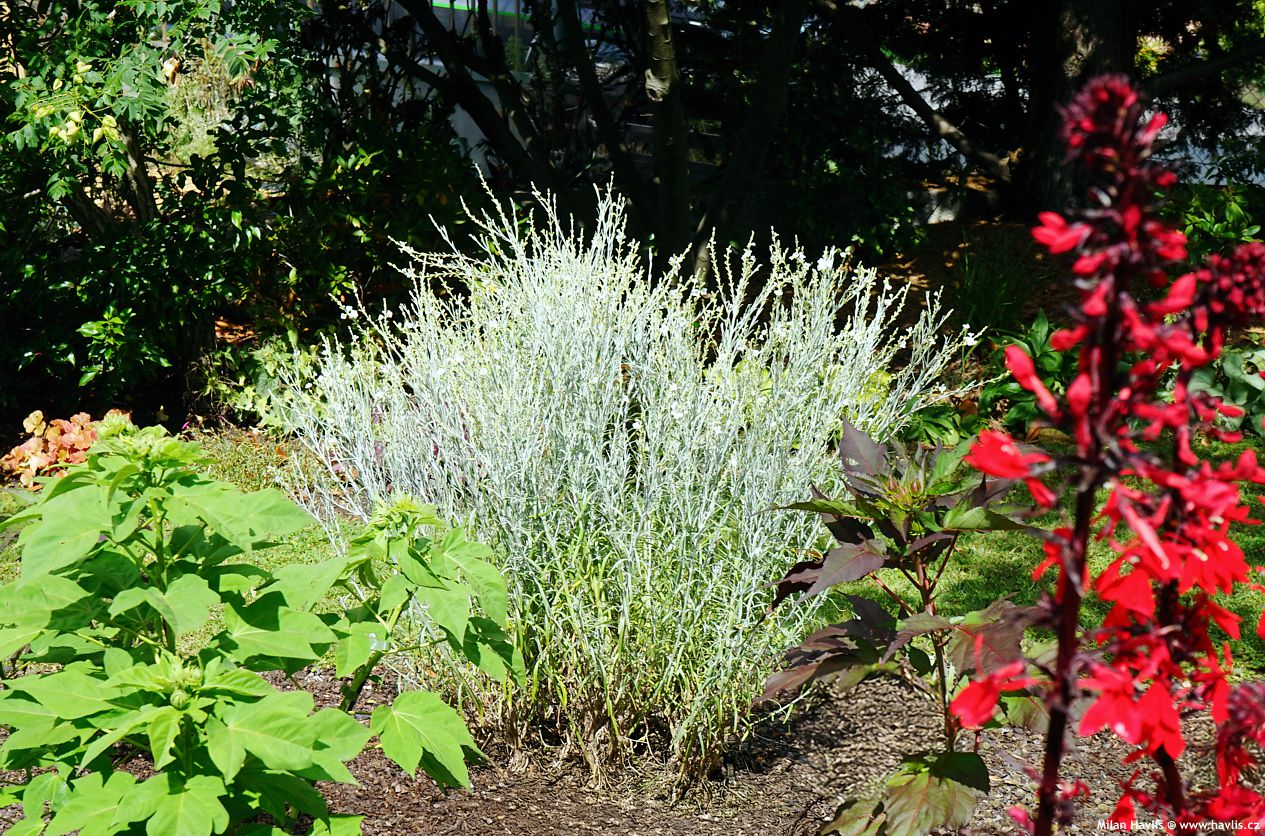
In garden design, the river star functions as a bright contrast element. It combines beautifully with dark‑leaved perennials such as colourful heucheras or black columbines, with lavenders, or with roses, to which it provides a delicate backdrop. In modern plantings it also works well alongside ornamental grasses, where its silvery tone enhances the movement and colour of surrounding plants. Thanks to its fine habit it is equally effective near water features, recalling its natural habitat. It can also serve as one of the highlights of so‑called �silver gardens,� beds composed of plants with silvery foliage such as artemisia, santolina, or helichrysum.
Last update 19-09-2025; 06-09-2026
For cultivation it requires a sunny position and well‑drained, rather poor soil. Although in its native habitat it grows by water, in gardens of cooler climates where winters bring frost it does not tolerate prolonged waterlogging � it needs moisture but always with good drainage. Feeding is possible but not essential. In C.E. continental climate Gomphostigma virgatum behaves as a semi‑shrub: in mild winters part of the woody stems may survive and sprout again from their tips, but in harsher frosts the whole top growth can die back and the plant will re‑emerge from the base. The best approach in spring is to wait and see what is alive, then cut back to green tissue; if everything above ground has frozen, simply prune to the base, from where it reliably produces new shoots. The hardiness of Silver Butterfly was originally listed only to �15 �C, but horticultural practice in Europe confirms that well‑established plants can withstand down to �22 �C, provided they are in free‑draining soil and a sheltered site. In colder regions, winter protection or container culture with the option of moving the plant to a frost‑free space is advisable.