










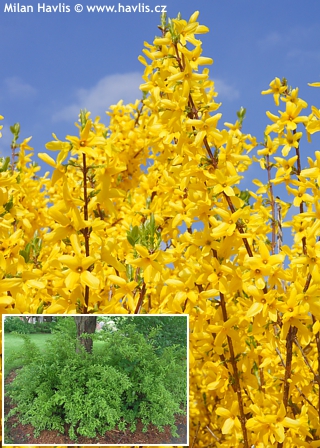
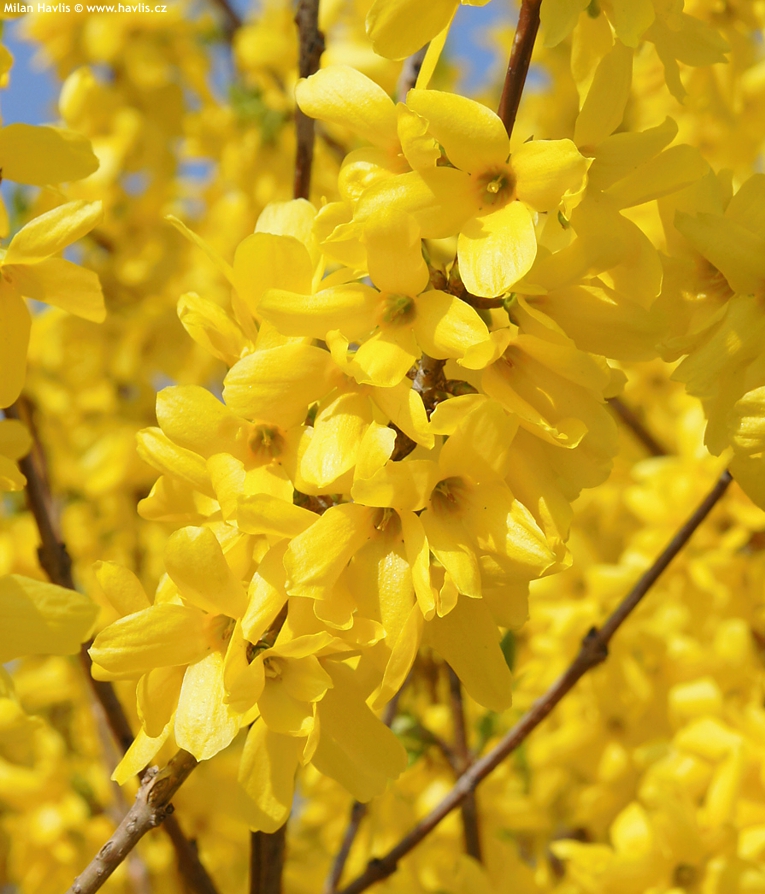
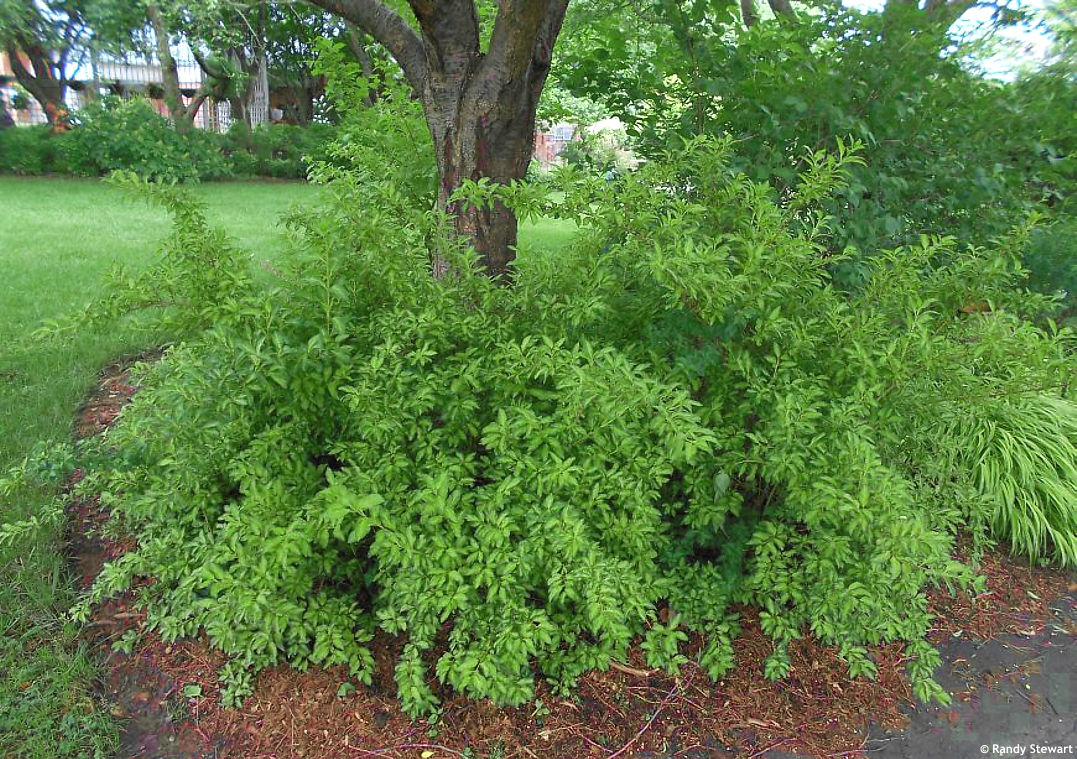
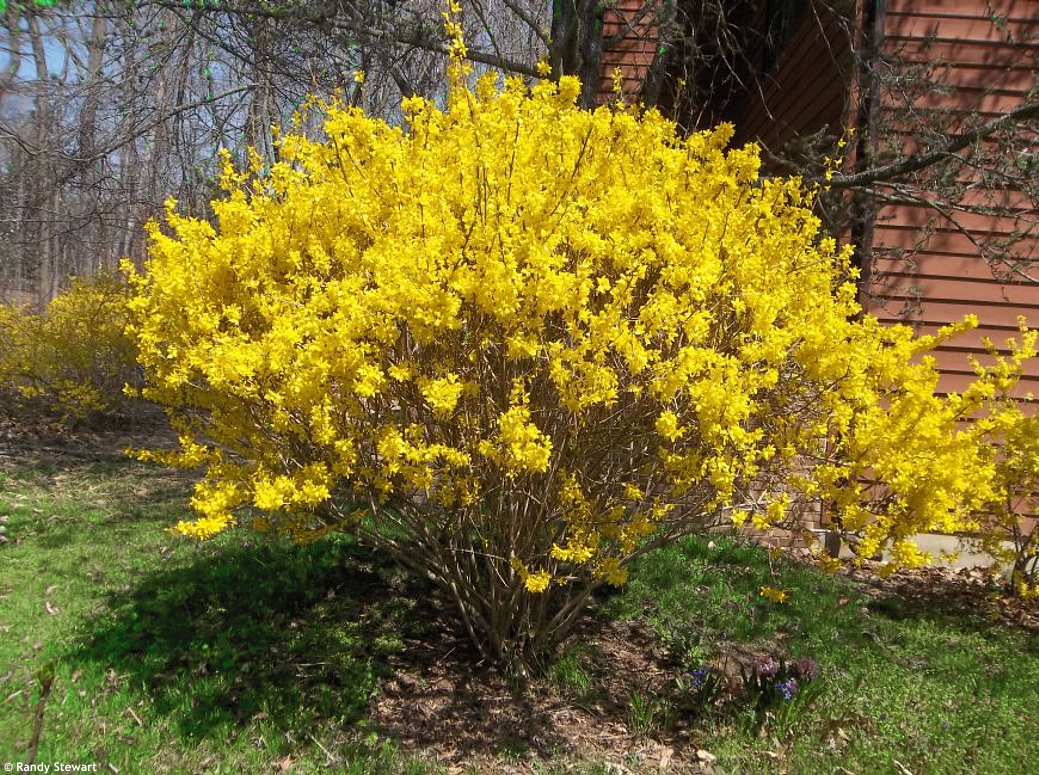
Forsythia × intermedia 'Flojor' MINIGOLD® golden bell

 Symbivit Tric (arbuscular)
 Symbivit (arbuscular)
Forsythia
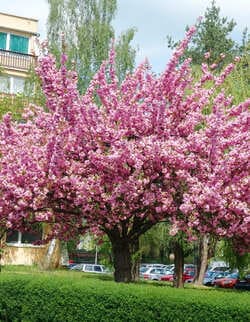
Golden bell is one of the earliest blooming shrubs in Central European spring. Though considered one of the most usual, perhaps boring, and omnipresent shrubs, once it puts up its millions of vivid yellow flowers, it cheers up many winter-tired faces. Forsythia x intermedia is supposed to be a hybrid between F. suspensa x F. viridissima, found by H. Zabel as a single seedling in G�ttingen Botanical Garden in 1878. Eleven years later it was introduced by Arnold Arboretum in the USA and has been a popular shrub ever since.
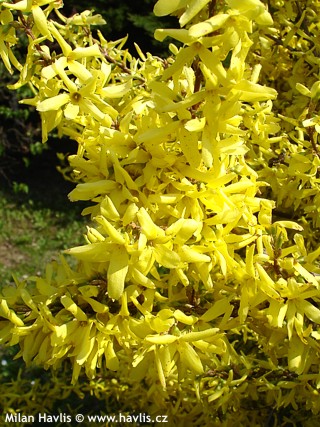
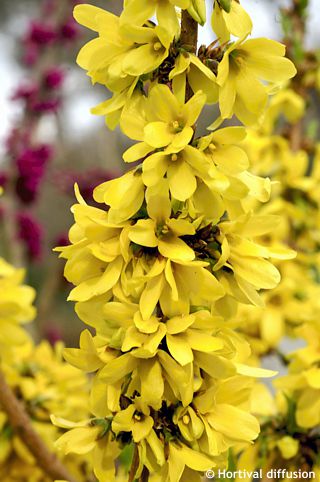
MINIGOLD® is a French variety of compact and shorter growing golden bell from 1972. It makes strong and upright branches, covered with a profusion of sulphur-yellow flowers from April. They are usually not visited by bees as they contain very little nectar and are only used if other flowers destined to bloom at the same time are for some reason late.
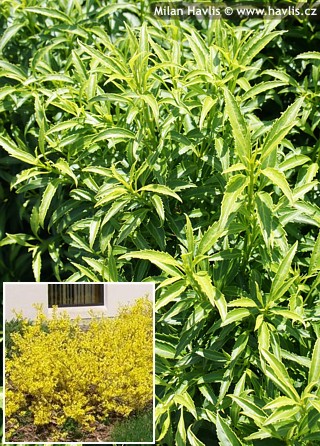
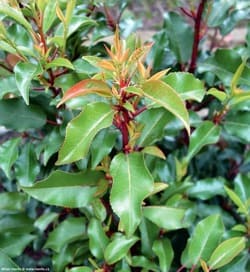
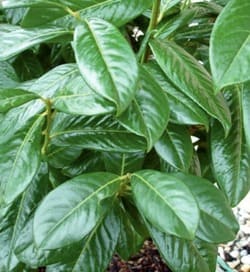
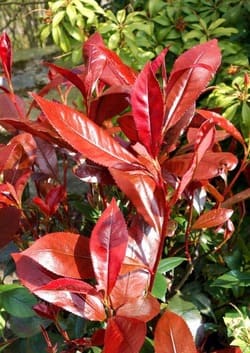
Deciduous leaves are lanceolate, serrated at margins, mid-green in summer and deep rose-maroon in autumn. There may be a pale yellow-green band running along the midrib, but some mother plants come from a clone lacking this feature. The bark is orange-brown. It can be pruned almost any time from spring until early autumn, however, it makes the best sense to do so after flowering. Light trimming is usually not desired, it is often pruned harder (by about 50 %) or more for rejuvenation This forsythia can even be cut into old wood and readily regenerates. It grows considerably slower than most older varieties.
Last update 14-10-2023
Golden bell belongs to the same olive family as many other easy-to-grow shrubs of temperate climate such as philadelphus, syringa, ligustrum or fraxinus. It is widely soil adaptable and requires zero maintenance. It will tolerate poor soil, both temporary drought or occasional flooding, quick temperature swings, and road salt. Fully hardy to min. -29 �C (USDA zone 5) but withstands short spells of deeper frost.