













Deutzia × rosea rose deutzia

 Symbivit Tric (arbuscular)
 Symbivit (arbuscular)
Deutzia
Deutzia and its hybrids are deciduous shrubs from the hydrangea family, native to East Asia and America. The first mention of it can be found in Japan, where Engelbert Kaempfer first saw the species Deutzia scabra in 1712, but it took more than a hundred years for Deutzia to reach Europe. The name Deutzia was given by the Swedish botanist Carl Peter Thunberg in honour of his friend and patron, Johann van der Deutz, an 18th-century Dutch botanist. The plant is popular for its abundant white or pink inflorescences that bloom in late spring. Being easy to grow, pollution resistant, and very hardy, it has become one of the key landscape plants even in locations with poor growing conditions and limited maintenance. The shrubs provide shelter and food for garden animals, thereby contributing to biodiversity. The bark and leaves of some species have been used in traditional Chinese medicine long before the Western world even discovered Deutzia.
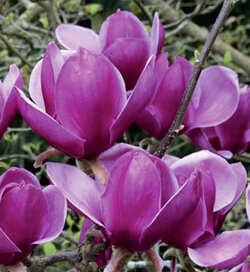
Rose deutzia is a hybrid, or more accurately, it was originally a group of several hybrids and selections resulting from the crossbreeding of D. gracilis and D. purpurascens, conducted by the renowned French botanist Victor Lemoine (1823-1911) between 1895 and 1900. All these hybrids are very similar, and only significantly different plants were given their own cultivar names. A typical hybrid is a shrub with flowers that are medium pink on the outside and pale pink to almost white on the inside. They are single, 5-petalled, and arranged in broad panicles. They bloom from late May for about three weeks. The leaves are deciduous, bright green, narrowly ovate with a prominent tip, and finely serrated at the margins.
The plant forms elegant shrubs with upright branches first which, as they lengthen and grow longer, elegantly arch and eventually make the plant look like a fountain. It grows to about 1-1.5 m in height and, without pruning, a little more in width. Pruning is not necessary, but you can prevent the formation of unsightly seed pods by cutting back branches with spent flowers by half to two-thirds immediately after flowering. It blooms on the previous year’s wood, so it needs enough time to produce new branches by winter. Due to its smaller size, it is also suitable for smaller gardens and containers, and its arching habit will nicely contrast with, for example, the upright habit of small conifers in a mixed border.
Last update 10-12-2024
Deutzias are hardy, trouble-free, resistant to diseases and pests, and can thrive in almost any soil. They do not require fertilization, but a bit of extra nutrients will enhance their appearance in a well-maintained garden. They prefer sunny locations and moist soil but will also grow in partial shade. Fully hardy to about -30�C (USDA zone 5).