











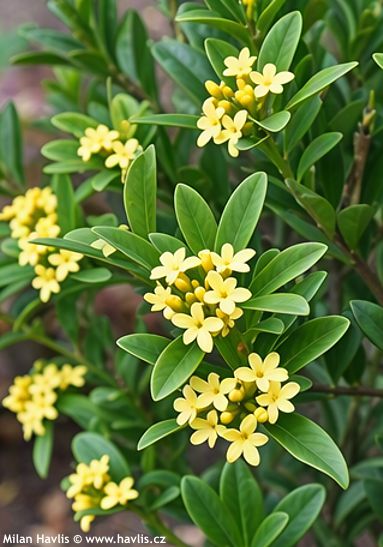
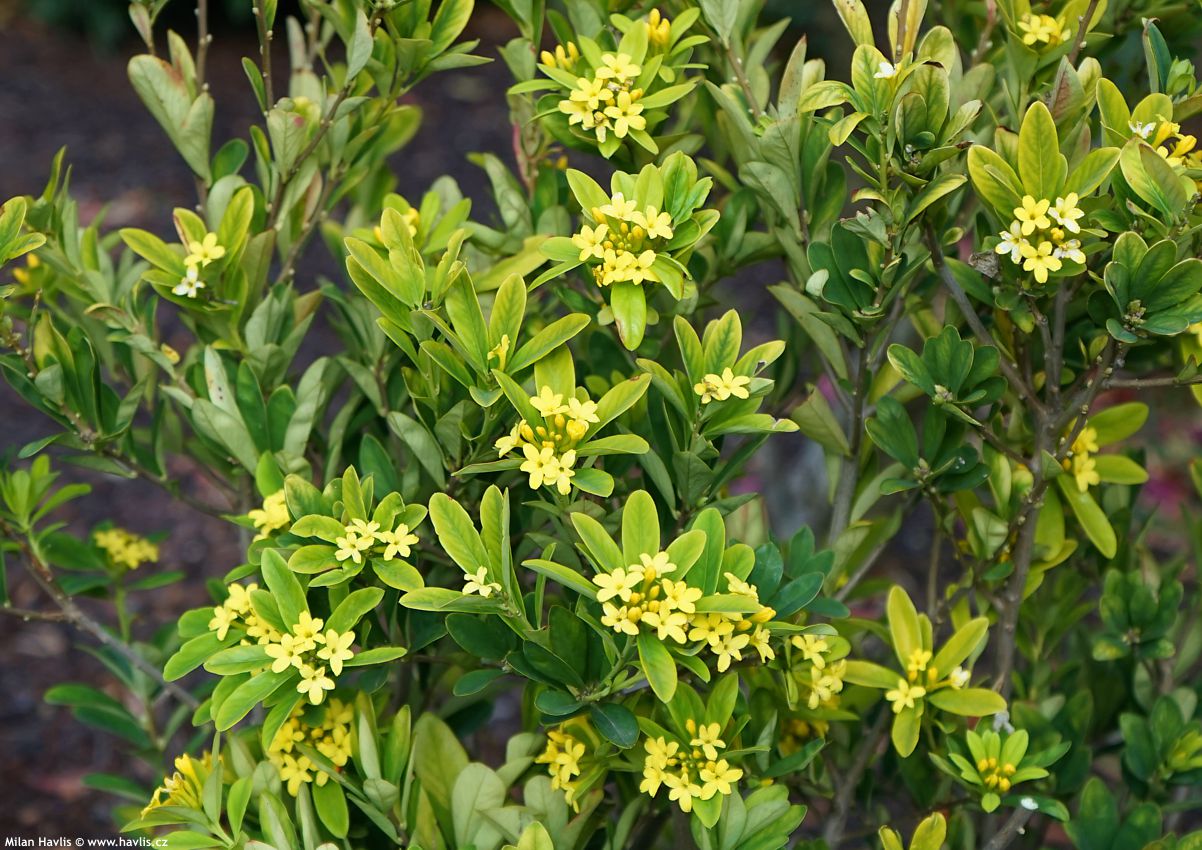
Daphne gemmata 'ROYAL CROWN' budded daphne

 Symbivit Tric (arbuscular)
 Symbivit (arbuscular)
Daphne
The genus Daphne includes approximately 95 species of shrubs distributed from western Europe through the Mediterranean region and the Caucasus to the Himalayas, China, Korea and Japan. The greatest diversity is found in eastern Asia, where many of the ornamental species grown today originated. The genus was described by Carl Linnaeus (1707�1778) in 1753 and named after Daphne, the nymph of Greek mythology who was transformed into a tree by her father to save her from the advances of Apollo. Like many botanical names, Daphne is therefore a reminder of an age when botany and classical scholarship were closely intertwined. Daphnes have fascinated gardeners for centuries thanks to their often intensely fragrant flowers, which in some species appear while the garden is only just awakening from winter, while in others they continue to provide interest throughout much of the growing season. Their beauty, however, comes with a less obvious side: most species contain potent toxic compounds that protect them from browsing animals and. Botanists also continue to debate the exact boundary between Daphne and Wikstroemia, and several species have been transferred between the two genera over time, leaving aspects of their classification open to discussion.
Daphne gemmata was described as a distinct species by Ludwig Diels (1874�1945) at the turn of the 19th and 20th centuries from material collected in the mountains of south-western China. Unlike the better-known daphnes of European gardens, it inhabits neither woodland edges nor shrubby slopes, but sunny rocky outcrops, cliff ledges and dry mountain hillsides in western Sichuan and northern Yunnan, at elevations reaching around 1,800 metres. For much of the year its habitat is exposed to intense sun, wind and alternating periods of drought and moisture, making it a remarkably resilient inhabitant of rugged landscapes. Perhaps for this reason it is deciduous, while evergreen daphnes generally favour more stable climatic conditions. Although the species never became part of mainstream garden culture and never acquired a tradition comparable to that of the fragrant Japanese and Chinese daphnes, it remains noteworthy for two reasons. It is one of the few yellow-flowered daphne species and has also attracted attention from modern phytochemical research, which identified biologically active compounds typical of the genus, including coumarins, substances also known from a range of medicinal and pharmacologically studied plants. The species epithet gemmata derives from the Latin word gemma, meaning a bud or plant eye, but also a jewel or gemstone. The English word gem shares the same origin. The epithet can therefore be loosely translated as �budded� or �bearing buds�. The description seems fitting, as the plant carries numerous dormant buds along its shoots, ready to develop into leaves or new branches whenever needed.
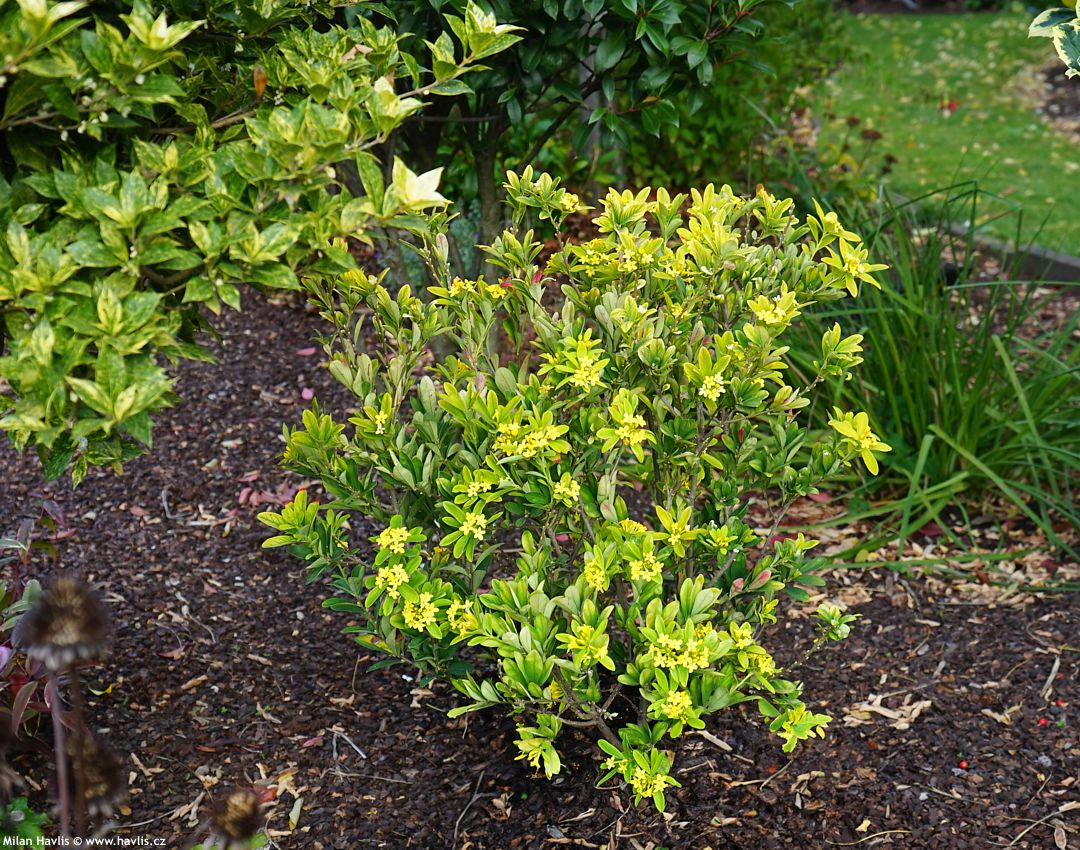
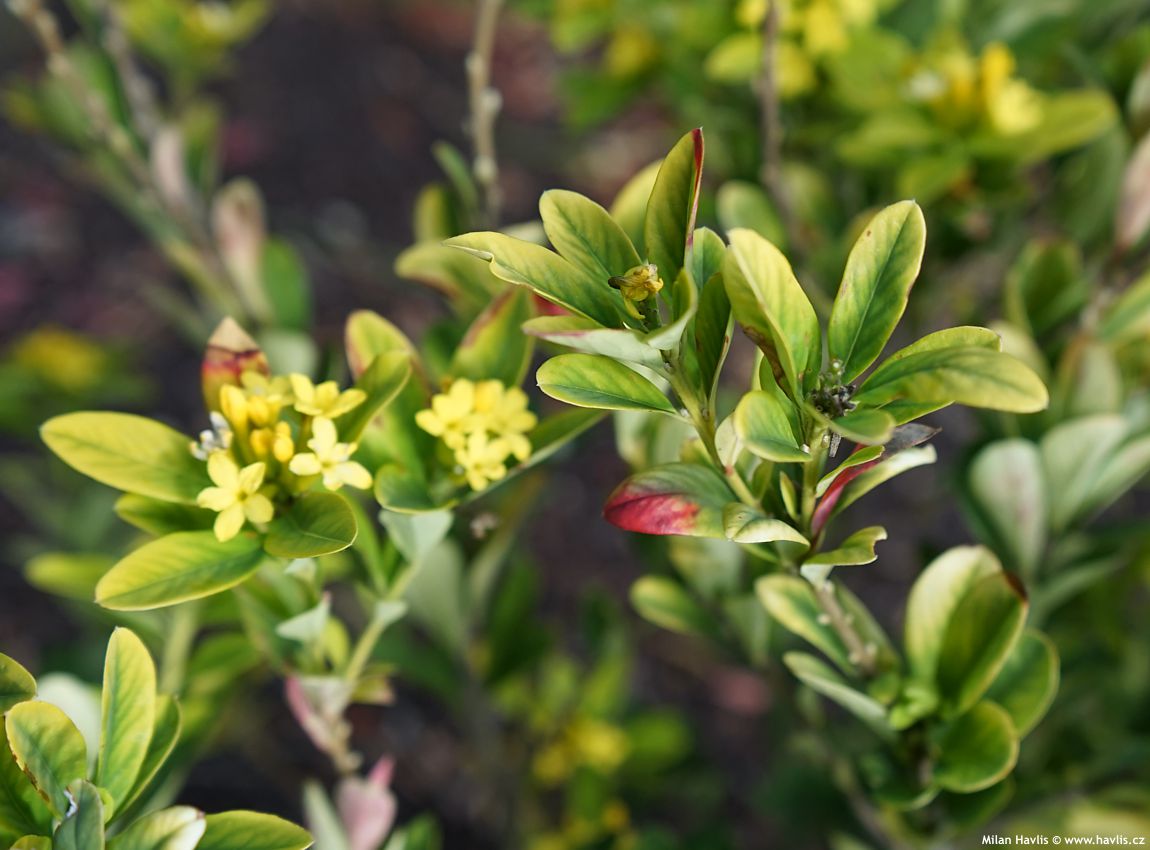
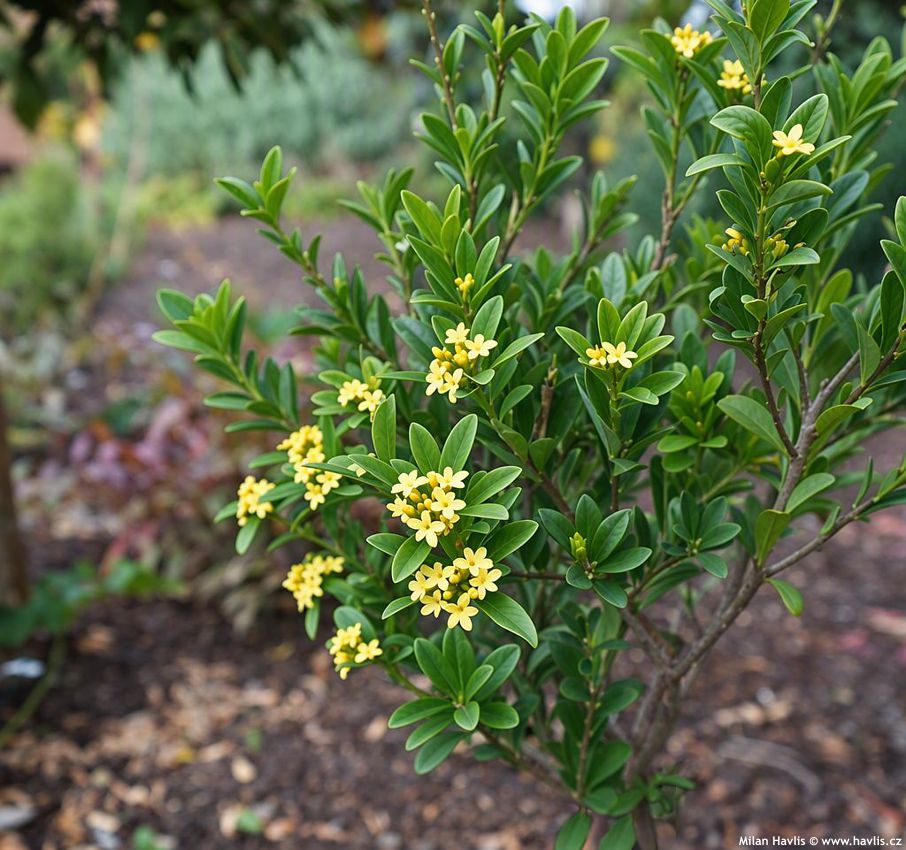
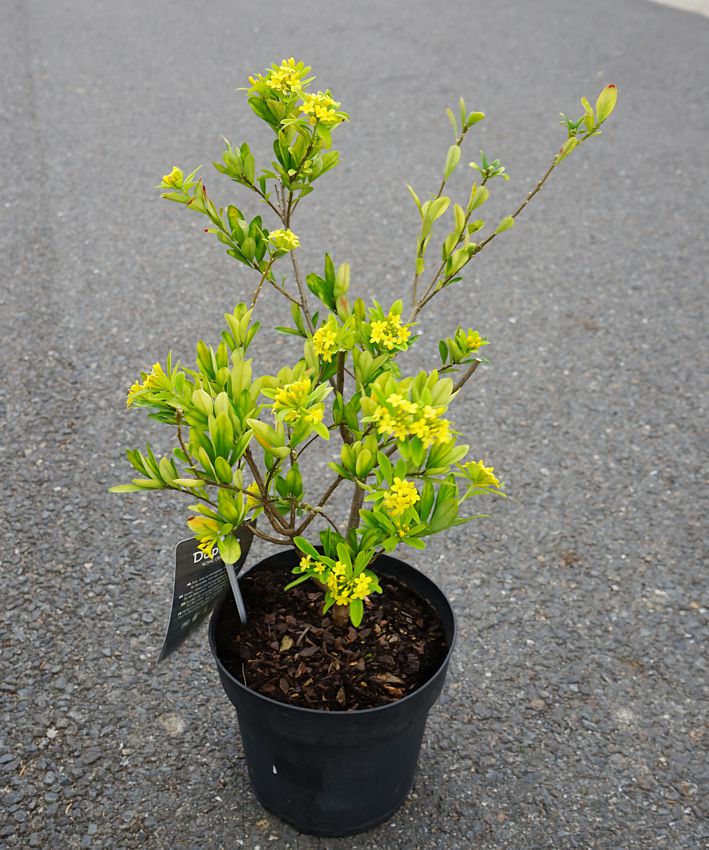
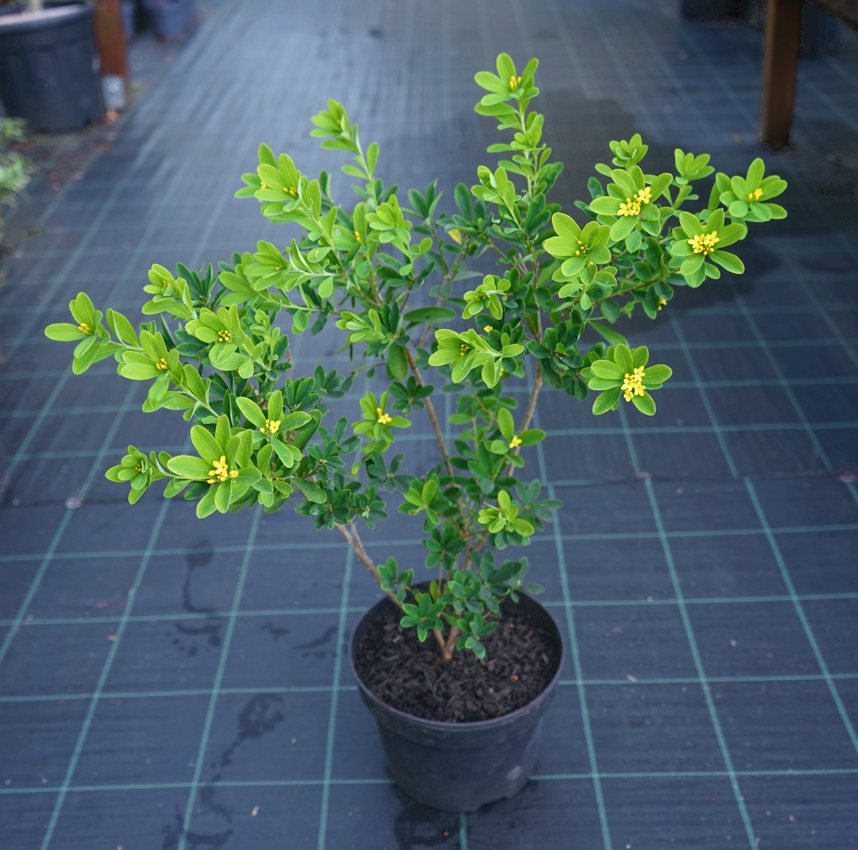
Royal Crown daphne is something of a phenomenon. Nobody seems to know where it came from, when it arose or who selected it, yet it has quietly become widely available and is treated as though it had always been part of the daphne world. Its most striking feature is the exceptionally rich yellow flower colour, so unusual among cultivated daphnes that it was probably the inspiration behind a name that practically glitters with gold: Royal Crown. The flowers appear in generous clusters at the tips of the shoots and, rather surprisingly for a daphne, they have no fragrance at all. Not a trace, indeed. No matter - they are beautiful, and there are plenty of them and the plant flowers repeatedly through the season. The first display appears in late spring, the second arrives in mid-summer, and a third begins in September or October, often continuing until the first frosts. Very few flowering shrubs can match that performance.
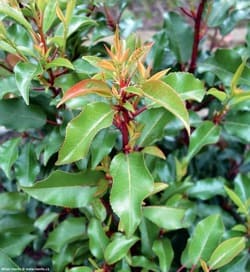
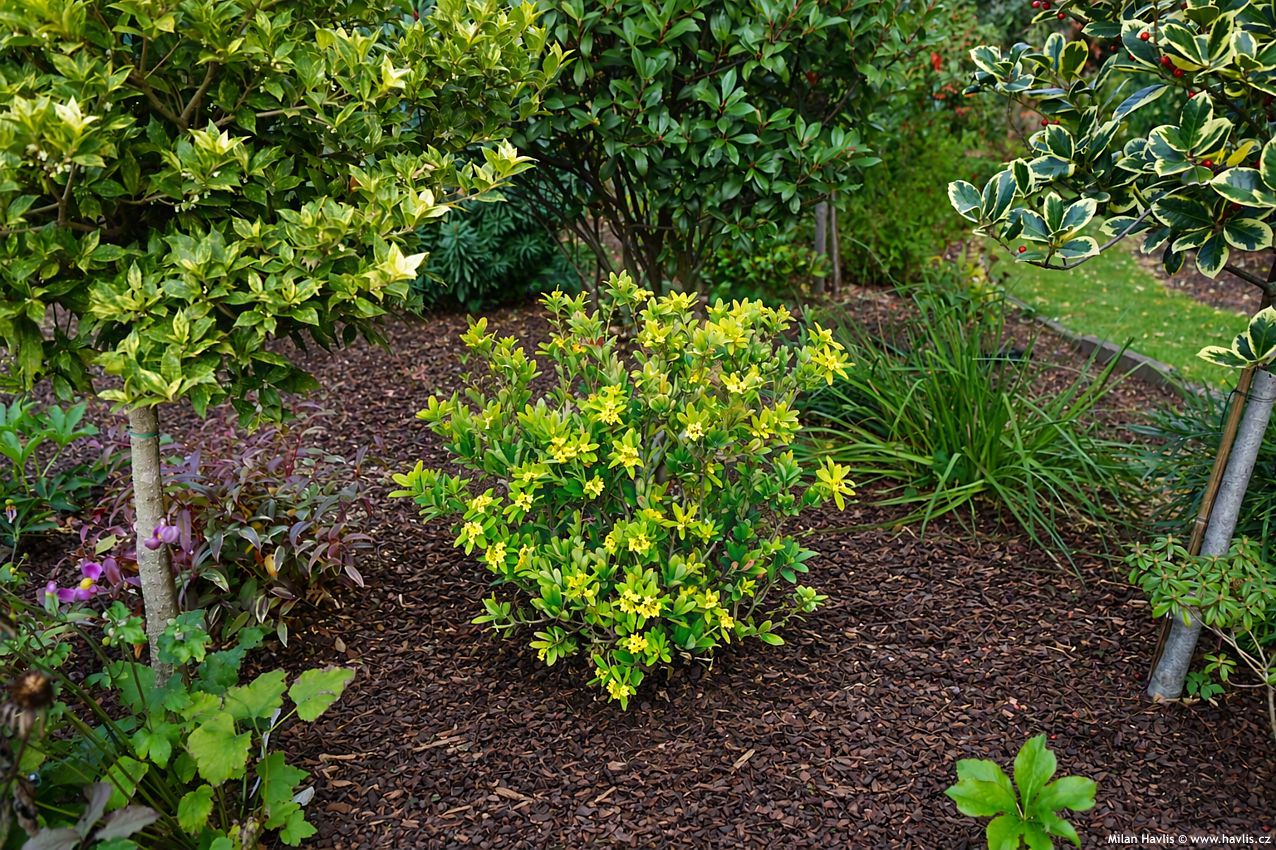
The shrub grows slowly, forming a dense, upright, semi-spherical habit reaching approximately 0.8-1 metre in both height and width. The deciduous leaves are bright green, elongated elliptic, healthy and attractive throughout the growing season. Autumn, however, brings an unexpected bonus. The foliage turns scarlet-red and purple, creating a remarkable backdrop for the still-present golden-yellow flowers. Although some references mention red fruits developing after flowering, which would be poisonous like the rest of the plant, we have not yet observed them on our own plants. So far, the cultivar has proved hardy to at least -23 �C (USDA zone 6) without damage, trials are ongoing.
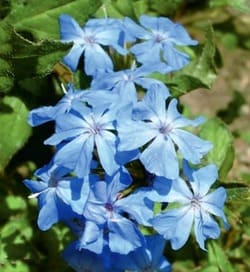
This yellow-flowered daphne deserves a position where its unusual colour will not disappear among dozens of competing blooms. It works particularly well as a small specimen shrub near paths, terraces or seating areas where the successive waves of flowering can be appreciated at close range. It combines beautifully with perennials and subshrubs in blue and violet tones, such as hardy Geraniums, Salvias, Caryopteris and larger species of Ceratostigma. Gardeners who prefer structure over masses of flowers may also find it a worthy companion to dwarf conifers and other compact shrubs such as Choisya, Pieris and Hebe. Thanks to its neat, disciplined habit, it is equally suitable for smaller gardens, gravel plantings and collections of unusual woody plants, where its appeal extends well beyond flowering into the autumn foliage season.
Last revised: 28 October 2026
Daphnes grow slowly, are difficult to propagate and dislike being transplanted, which explains why they are often among the more expensive shrubs in cultivation. Once properly established, however, they can thrive in the same position for many years with remarkably little intervention. They prefer a sunny to lightly shaded site and an ordinary, well-drained soil with a natural level of fertility, ranging from slightly acidic to slightly alkaline. They perform poorly in containers or troughs, where their sensitive root systems are subjected to fluctuating temperatures and moisture levels. Fertilisers often do more harm than good, whereas incorporating mycorrhizal fungi at planting time usually produces better results. Newly planted shrubs should be kept moderately moist for the first few months, but once established it is preferable to stop watering altogether and allow the roots to rely on natural soil moisture. Most problems with daphnes arise not from drought but from excessive moisture. In poorly ventilated, persistently damp conditions they may suffer from fungal diseases that cause individual branches to die back. Such shoots should be removed promptly and the growing conditions improved. Pruning should be kept to a minimum and is generally restricted to the removal of damaged, dead or poorly placed branches after flowering.
Goods are shipped all over Europe. For Russia and U.K. and for further details please read about SHIPPING OPTIONS HERE.
Are you interested in a serious discount for orders NOV-FEB? Check your options here.
THE PRICES INCLUDE VAT of 15%. For quick conversion you can use 1 CZK = approx. 0.04 EUR
- STANDARD QUALITY - Plants of this group are 1st class quality with number of branches and overall density adequate to their size and age, considering they were container grown.
- DE LUXE QUALITY - This label guarantees a luxurious quality of manually selected plants that, compared to their height and age, are exceptionally dense and beautiful.
- EXTRA - These plants are usually mature and bigger specimens with exceptional overall appearance.
- STANDARD (as described in the plant form) means a tree with a trunk of 190-210 cm and a crown at the top, unless specified differently. The commercial size for trees is their girth measured in the height of 1m from ground.
- HOBBY - These plants are of the same quality as our standard-quality plants but younger and therefore cheaper.
- SHRUB - a woody plant with branches growing bushy from the ground level.
- HALF-STANDARD or MINI-STANDARD - a small tree with shorter trunk, its size is usually specified.
- FEATHERED - These are trees with branches growing already from the base of the trunk and up along the stem.
- GRASSES and PERENNIALS - Sizes given usually read the diameter of the pot or the clump, as specified.
